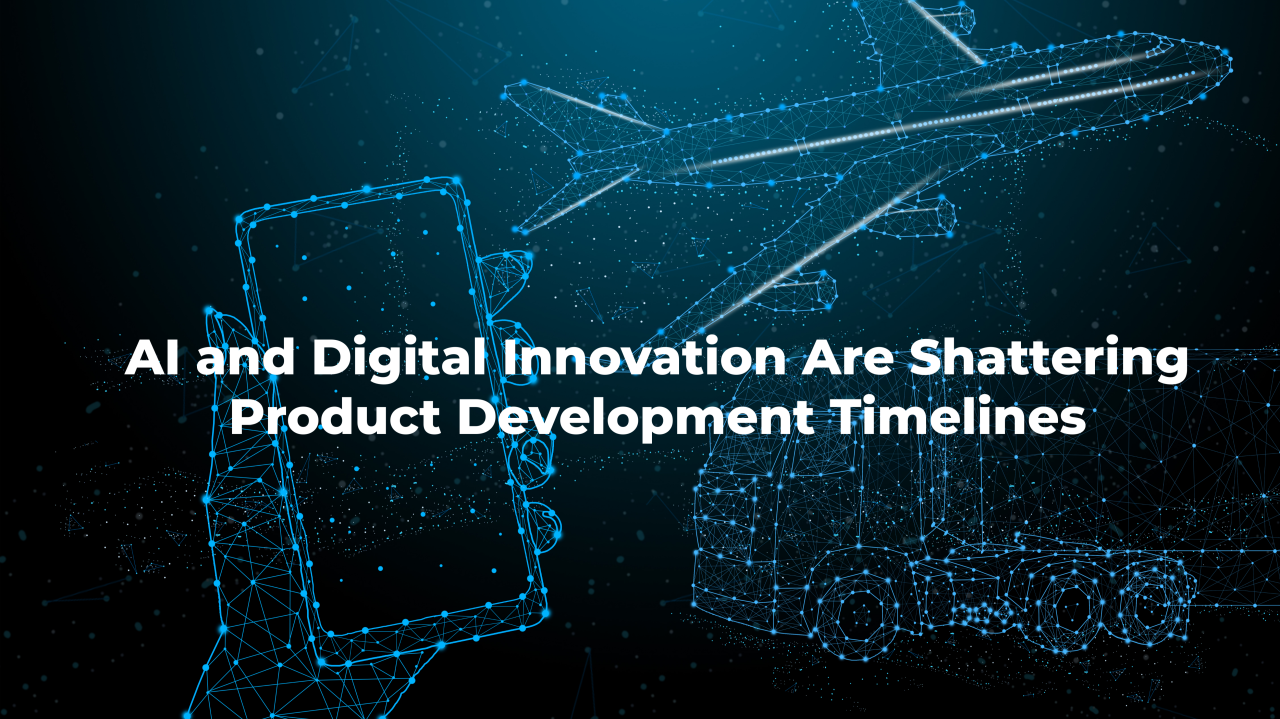
In an era of rapid technological advancement, businesses can no longer afford to wait years to bring products from concept to reality. Traditional product cycles are becoming obsolete, and the demand for speed, efficiency, and adaptability is at an all-time high. AI is not just a tool—it’s a catalyst, reshaping entire industries, challenging conventional timelines, and unlocking new potential across sectors. Imagine reducing development timelines by years, saving millions in operational costs, and achieving unprecedented environmental gains. This is the power of AI, transforming the way industries respond to market demands and environmental pressures alike.
Generative AI is revolutionizing early-stage product design by enabling faster ideation, prototyping, and scenario testing. This allows designers to generate multiple iterations, explore diverse design options, and even simulate functionality—all at an accelerated pace. For instance, by minimizing trial-and-error processes, Generative AI slashes pharmaceutical development timelines by up to three years, saving millions in R&D costs. In healthcare, this acceleration allows life-saving drugs to reach the market sooner, benefiting both patients and bottom lines.
Digital Product Lifecycle Management (Digital PLM) and Digital Thread are also playing critical roles in reducing cycle times by creating seamless connectivity across the product lifecycle. Digital PLM integrates every stage, from design to production to end-of-life management, into a single, unified digital ecosystem, ensuring real-time data access and process synchronization. This holistic view is a game-changer for industries like manufacturing and aerospace, where product development and operational efficiency are closely interlinked. Digital Thread, in particular, establishes a continuous flow of information throughout the lifecycle, enabling instant access to critical data points and reducing inefficiencies that traditionally bog down development.

In manufacturing, predictive AI, alongside Digital PLM and Digital Thread, bridges the gap between centralized data teams and operations, reducing unplanned downtime by up to 30% and keeping production lines optimized. In mining, AI-backed recalibration algorithms prevent data loss, optimize equipment usage, and streamline maintenance schedules—all of which lead to significant productivity gains. Energy providers, like the Vistra power plant in the United States, are seeing similar benefits. AI and Digital Thread enable data from various stages of production to inform real-time decisions, improving efficiency by over 2% and saving $4.5 million annually while reducing emissions by 340,000 tons. This case highlights how AI and digital integration not only enhance profitability but also contribute to a cleaner energy footprint.
In aerospace, Digital Thread’s ability to facilitate real-time diagnostics and enhance data transmission between satellites and ground stations is invaluable. Frequent transmission issues previously required engineers to sift through logs to diagnose failures, often causing delays. Today, AI-driven diagnostics allow engineers to pinpoint root causes in real time, reducing latency and enhancing data reliability by over 40%. This capability ensures timely data transfer, which in turn provides accurate and immediate insights from satellite data.
Key KPIs Showcasing AI, Digital PLM, and Digital Thread’s Value Across Industries
– Time-to-Market Acceleration: AI and Digital PLM reduce product launch timelines by up to 5%, directly impacting revenue generation and competitive edge.
– R&D Cost Efficiency: By enabling faster prototyping and scenario testing, Generative AI and Digital PLM cut R&D costs by up to 20%, particularly in sectors like pharmaceuticals and manufacturing.
– Downtime Reduction: Predictive maintenance powered by AI and supported by Digital Thread reduces unplanned downtime by 20-30%, leading to millions in annual savings.
– Environmental Impact: AI-driven efficiency improvements have cut CO₂ emissions equivalent to removing 66,000 cars from the road, showcasing the sustainability benefits of integrated AI and digital solutions.
– Supply Chain Optimization: AI and Digital PLM reduce lead times by 25% and lower inventory holding costs by up to 30%, making supply chains more responsive and reducing waste.
By fully embracing AI, Digital PLM, and Digital Thread, industries are developing resilient, adaptive ecosystems poised to meet shifting market demands and regulatory standards. Companies that integrate these technologies today are positioning themselves as tomorrow’s leaders, setting a new standard where innovation aligns with responsibility. The combined impact of these tools is not just reshaping industries but also forging a sustainable, agile, and technology-driven future. The AI revolution, supported by digital integration, is only beginning, and its influence will define the competitive landscape for years to come.